Sunday, 16 December 2012

Continuty Task First Cut

Problems we faced  - (First cut of contintuy task)

  • Our story board wasn't detailed enough which is why we ended up adding into the clip extra shots 
  • One of the shots we had to change as we needed a stack of paper but it kept falling over so we decided we need to use a paper shelf so the paper will not physical fall over
  • Narrative was too simple - this restricted our group technically as the storyline was simple, consisting of the same type of shots
  • No non diagetic sound was included - struggled to find the appropiate sound which will fit in with the clip

How we are going to overcome these problems in our real story board?

  • Make sure when we create our real storyboard we go into detail so that we do not have to add in any extra shots 
  • Try out all the different kinds of shots to see if they work so that we do not have to change it last minute
  • Research into different kinds of music - seeing which ones suit the clip and which ones don't.

The software used was Adobe Premiere Pro. I was considerably new to this software but due to the extra lesson and the amount of editing time we spent I have gained key skills which will help me when making my opening sequence. I still think I have a lot to learn with the software, however, me and my group managed to make a successful first cut of our continouty task with the brief, basic skills we have learnt. 


Overall, the filming of the continuity task has been successful in teaching me why the story boarding is significant and how it plays a large roll when making our real one. By looking at and evaluation the specific problems me and my group faced it helps us view and overcome the problems, it also helps us not make the same mistake again. Finding a solution for each of the problems will also help us when coming to story boarding and filming as we can now learn from the previous problems we have faced.


Wednesday, 12 December 2012

Shotlist

Below is the shot list for our final product.

  • Long shot of the back of our protagonist facing a window
  • Close up of a bottle of alcohol and a glass, and our protagonist pouring liquid out of the bottle into the glass
  • Medium shot, the camera tracks round to a side view of the protagonist
  • Close up of the protagonist's face, as bring the glass towards her mouth
  • Extreme close up of protagonist drinking the drink
  • Extreme close up of the protagonist's eyes
  • Fade to a white screen
  • Fade to extreme close up of teachers eyes
  • Low angle, point of view shot of teacher telling the protagonist that her brother has gone missing
  • Fade to white screen
  • Close up of protagonist looking frustrated/ upset
  • Blurry/slightly out of focus point of view shot from the protagonist as she walks over to the desk
  • Medium shot of protagonist sat at the desk
  • Close ups/ Extreme close ups of the protagonists hands circling/underling words in articles, photographs, finishing drawings etc.
  • Cut to the title centralised on the screen
  • Long shot of the antagonist walking down some stairs
  • Medium shot of antagonist looking at his reflection in a mirror.

What I Have Learnt From Storyboarding

Before we did our practice storyboard, continuity task and spoke to a real story boarder (Sophie who came in and taught us about story boarding) I thought that story boarded at this point had no importance. This was due to my lack of knowledge and understanding of how significant story boarding is to the final coursework piece. Practicing and completing a rough storyboard for myself gave me a brief outline on how detailed a storyboard would be. When I went onto story boarding about my continuity task I already had the knowledge on the amount of detail which should be included. This helped when we started filming as I already knew what shots, angles and how long the clip should last for. When Sophie came in and taught us about story boarding I gained a wider understanding on the key concepts and features a storyboard should consist of. Example - the rule of thirds. I feel that I have achieved an expanded ability  which will help me when I come to make my real storyboard. Overall, the amount of learning and practicing I did on story boarding will help me when I create my story board of my title sequence as I now know what not and what to include. 

Tuesday, 11 December 2012

Targets - Merlin essay

From my previous essay my targets were to develop on my analysis of sound and editing. In my current essay I have improved as I have achieved a higher grade because of my deeper analysis. In this essay which was based on an extract from Merlin I received 41/50. I have improved a lot since my last essay which is good as I am progressing further as I go along. My new targets are:

  • Remember to respond to the question, opening each paragraph by making a clear argument point about representation.
  • Remember to use technical terms frequently and accurately.


This tells me that in my next essay I need to make sure that the point I am making is always connected back to the question. Also, I need to revise Semiotics again as I still am not fully confident in using the different kinds of symbols. This has helped me overall as I can now look into and highlight what I need to do to improve so that I can gain a better mark in my upcoming essays which will help me practice for the exam. It will also help me with coursework as I need to understand the technical terms before I start filming as I do not want to get my filming incorrect.

Story boarding Learning Continued..


In my previous lesson a student who used to take Media Studies A Level and went to University and achieved a degree in story boarding helped me gain a more advanced insight on how story boarding really works. Firstly, Sophie displayed what the key features of story boarding should include such as:
  • When drawing your storyboard do not worry to much about order as often adjustments are made and you will end up changing it around
  • Bullet point your storyboard so you have an idea of what to draw
  • Remember the rule of thirds

By Sophie telling me this I now know that if I draw my storyboard and the order changes it is only for positive purposes which will benefit me and my group. I also know that before I start my storyboard I should make a bullet pointed list so that when I come to make my storyboard I do not struggle in what to draw and annotate. I then found out what the Rule Of Thirds is - before Sophie taught this lesson I had no idea on this meaning. She explained that it meant that the screen is split into three sections and that the main character should be centralised so that it is the main focus. However, this tells me that if I do not want one of my characters to come across significant in the opening sequence I should place him to either side of my screen to make him appear less important. This will help me and my group as we have a more advanced understanding of the positioning on the screen. 

We then went onto watching an animated storyboard Gravity Falls on Disney Channel. Despite the fact that it is animated and it has not got any link to a Thriller. I still need to focus on the storyboard and how it has changed through the use of the storyboard being constructed in a successful way.

Below is the clip we watched -

From watching this clip is is clear that they have followed the basic story board which has helped them produce a successful opening sequence of an animated show. I can look at this and highlight the difference between the story board and the real opening sequence - the main differences are only the images are produced more clear. Even though I am not doing animation because of the characters, lighting, mise-en-scene etc it will create a huge difference from my story board to my real opening sequence. 


Overall, I think my storyboarding knowledge has expanded and I now have a more advanced understanding on storyboarding in general and why it will be important to me and my group. I have learnt that I do not need to draw out every movement of the characters in each shot as I can use arrows to designate the movement. I have also learnt that it does not matter if the storyboard is not in complete order as it may be moved around when filming and it helps you highlight the errors that were made in the first storyboard. 

Monday, 10 December 2012

Possible Locations


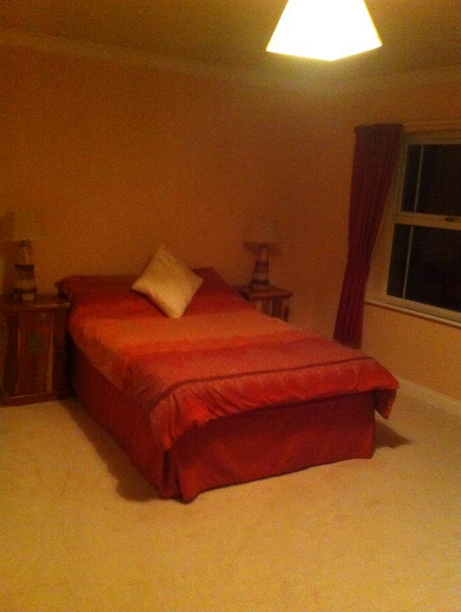
It was important we found a good location so that we could make sure our setting was appropriate to the story line. The main thing we focused on having is a basic room, with no electronics or decorations as we wanted the room to look isolated. We have looked at two rooms which are both plain and slightly similar but we need to decide which one as they both consist of different color schemes and layout. As we are presenting our antagonist to be wealthy we thought using a marble staircase will be appropriate as it will be able to ensure that he looks higher class. The mirror he will look into is also large which again will emphasis his wealth.


Thursday, 6 December 2012

Continuity Editing Task - Storyboarding

In my previous lessons me and my group have learnt how important story boarding is, and how it will help us when we come to sketching ideas of what our final opening sequence will look like. From knowing this we knew how important it was to create a story board for our continuity task which we all will understand easily.  It is important that each of member of the group can understand and read the story board properly so that it will be easy to direct the actors.

Before we started our story board we had to find out what we needed to include such as:
  • Shot reverse shot
  • So NOT break the 180 rule
  • Variety of shots
  • Non diagetic sound
  • Interaction between two characters


We need to create a story line which can include all of the above. This is why The first thing my group decided was to create a short narrative, this simply consisted of a person walking into a room looking through a pile of past papers, stealing answers to an up coming exam, and having teacher walk in and find them. We didn't want anything too complicated and we didn't want to waste time over it because we felt that our time would be better spent on creating the storyboard for the task. Doing this in a short period of time helped us think about the technical side to the filming as we needed to make sure we included the all the camera shots we needed, the sound which we feel would be appropriate for the story line and the dialogue between the two characters.

Overall, I think me and my group approached this task in a successful way as we have created a good story board which will help us highlight any improvements we may need to make when filming and also if we needed to include anything more into the short film. If me and my group were to improve the way we did this task it would be to focus more on the sound we would use. We had a brief idea but nothing specific which was negative as we need to make sure our sound is linked in with what we are trying to display.